

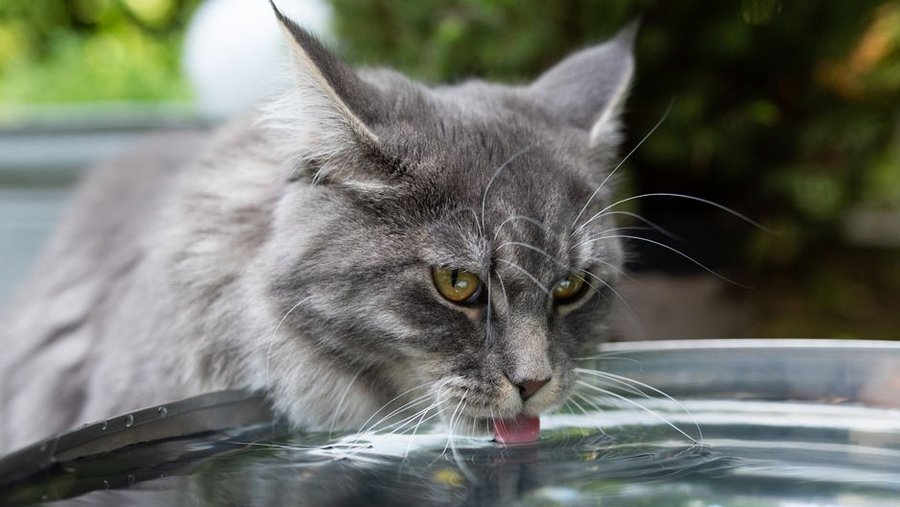
Cats tend to be fussy when it comes to drinking. It's often due to what's on offer. With these tips, you can make water intake more palatable for your cat.
An indoor cat weighing around 4.5 kilograms should consume up to 210 milliliters of water per day. If you only feed it wet food, it can almost cover its needs. However, with increasing activity or by feeding dry food, the requirement increases. If your cat does not drink enough liquid, there is a risk of urinary stones and kidney problems.
Tip 1: The right place to drink
For many cats, the problem starts with the choice of drinking place. What many owners don't know: Cats don't like to drink where they eat. They instinctively fear that the water could be contaminated by food scraps. So don't place the water bowl right next to the food bowl. Your velvet paw also doesn't want its litter tray near its water bowl. The drinking area should also be in a quiet place. Your house cat doesn't like stress and noise when it comes to drinking water.
Tip 2: Opportunity makes drinking
Ideally, you should place several bowls in different places around the house. Also in places where your cat often walks past. If your cat doesn't take to certain places, you can try again and move the bowls elsewhere. Once it has accepted one or two places, you can put the other bowls away again.
Tip 3: The right bowl
Cats have different preferences when it comes to how they drink. Some prefer shallow, wide bowls because they don't like bumping their whiskers on the edges. Others prefer to drink from tall vases. Offer your cat different containers. And pay attention to the material. Metal, glass and ceramic are suitable. Some cats don't like plastic as it is not completely odorless. This disturbs their sensitive noses. Some cats love it when the water moves. They therefore often drink from the tap. They will be even happier with a drinking fountain. Here too, it is better to choose a ceramic model rather than a plastic one. Many models have an activated carbon filter that keeps the water fresh and clean at all times. However, you still need to clean the fountain regularly. Otherwise bacteria and algae will quickly build up.
Tip 4: It's all about the right water
Cats are also different when it comes to the quality of the water. There are roughly two types: the fresh water fanatics and the "puddle drinkers". Some pounce on the bowl as soon as you put out fresh water. Others prefer water that has been standing around for a few days. In general, most cats are sensitive to chlorine in water. You should therefore leave fresh tap water to stand in a jug for at least two hours. Possibly even boil it briefly and then serve it cooled. For "puddle drinkers", you can leave the water to stand for several days. Normally, however, you should change the water every day and keep the containers clean. This is because your cat carries food residues and bacteria into the water. Not very tasty and not really healthy.
Tip 5: Add water
You can also mix a few tablespoons of water into your cat's food at every meal. When mixed well, many cats enjoy the extra portion of moisture. If you have a cat that loves its dry food and finds it difficult to change, you can try whether it will accept it soaked. If your cat can't be persuaded to change its food and is also not drinking well, you need to go for "trick 17". This is because a daily ration of dry food only contains around six milliliters of liquid on average. So you need to motivate your pet to drink at least 200 milliliters of water a day.
Tip 6: Use "trick 17"
You can use various tricks to make drinking "palatable" to cats that are particularly afraid of water. For example, with diluted cat milk or home-cooked (unseasoned!) meat or fish broth. Here you can experiment a little with how much cat milk or broth you need to add to get your cat to drink. You can freeze the broth into ice cubes. Some cats like to lick these (especially in hot weather) or find the water bowl incredibly interesting as soon as an ice cube floats in it. Finally, you can also try out whether your cat is simply annoyed because it doesn't recognize the water level and has dipped its nose in too often. Place a blade of grass on the surface. This little trick sometimes works wonders.
So many options - where to start? Basically: observe your cat, stick to what works well and leave everything that doesn't work. With a little attention and experimentation, your cat will also become a habitual drinker. It's worth it, because you can save them from typical cat ailments.