

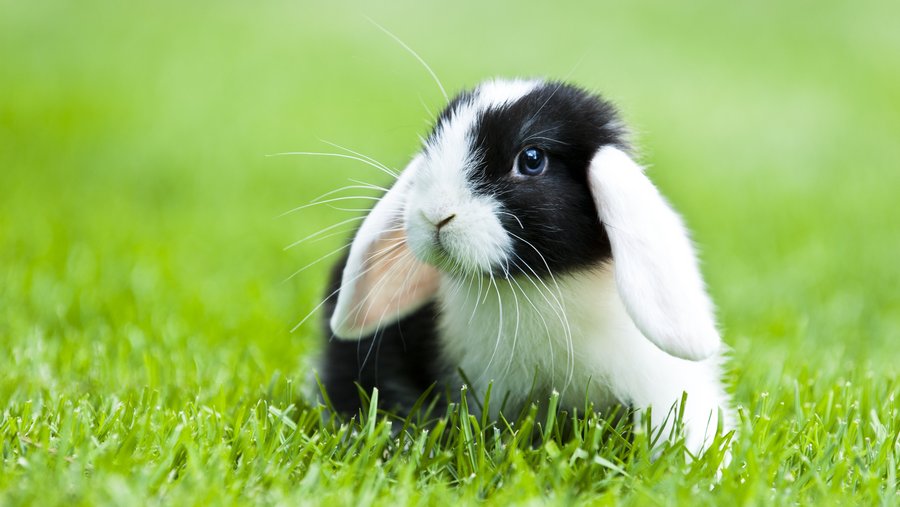
The enclosure: Out and burglar-proof
Suitable enclosures can be bought ready-made from specialist retailers, from sliding panels to complete aviaries. Or you can build them yourself. It is important that the enclosures protect your animals from unwanted intruders and at the same time prevent your pets from escaping. An enclosure that is closed at the top offers the greatest possible safety from dogs, cats, martens or birds of prey. If you use wood for the frame, make sure it is untreated. As rabbits love to dig for their lives, it is essential that you install a fence mesh at least thirty centimetres deep in the ground around the enclosure for your long-eared animals. Otherwise they may quickly dig their way to freedom. You can do without this protection for guinea pigs. Basically, your enclosure can't be big enough. Rabbits only really get going when there is plenty of space: they run around wildly and make funny hooks.
The right place: with sunny and shady sides
Ideally, the enclosure should be partly shaded and partly sunny. If you can't offer this, it's better to choose a shady spot. Your rodents will cope better with this than with too much heat. The location should also be as quiet as possible. In other words, not right next to the road or sidewalk, where cars, dogs and walkers can disturb your animals. And of course not next to the fence to the neighbor's dog. There should also be no poisonous plants such as yew, thuja or ivy within reach. It's also best to check the lawn thoroughly before your rodents move in. Make sure that there are no poisonous plants (lily of the valley, autumn crocus, tulips, etc.) on the lawn.
Important: structure the enclosure
The free-range enclosure should definitely be equipped with a safe retreat. You can simply remove the small house from the cage, so your animals will immediately find something familiar in their new environment. You should also structure the enclosure. In other words, divide it into different areas using stones, branches and boards. Just a bare meadow is not enough to make them feel comfortable. Of course, your animals must also have roughage (hay, straw) and sufficient water available in the free-range area. Drinking bottles can be conveniently attached to the fence and always provide clean water. Bowls need to be checked more often, but have the advantage that the animals often drink more water from them.
Out at last: getting used to the outdoors
First and foremost, getting your pet used to the outdoors means getting them used to green food. Your animals are probably already familiar with all kinds of vegetables and leaves. Mix them some grass and dandelion every day. Rabbits in particular react extremely sensitively to changes in food. An outdoor enclosure is always a breeding ground for colic! It is also best to gradually accustom your animals to the great freedom. Some rabbits or guinea pigs are very stressed at first, others jump straight into life. Start with half an hour and extend the free run by a further 30 minutes every day. Always stay close by at the beginning to see if your pets feel comfortable.
Hamsters & co: please don't!
Perhaps you're wondering whether you should also give your hamster or gerbils an outdoor enclosure? You shouldn't. Small rodents are very territorial animals. They orient themselves strongly by smell, like to move around their home on "well-trodden paths" and don't feel comfortable in unfamiliar surroundings. If you simply place them in a new enclosure, it often takes weeks before they perceive it as familiar. Every move is very stressful for them.