

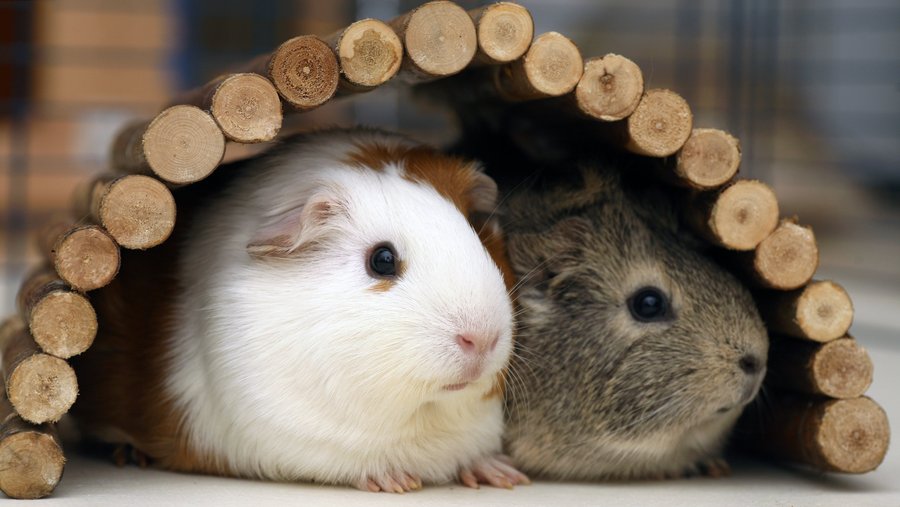
Whether you are a gifted handyman or have two left hands, there are plenty of ways to create different hiding places. You can find many of them ready-made in your household. If you keep several animals, each of them should have at least one sleeping house. But even solitary animals, such as hamsters, appreciate several hiding places.
Tip 1: Ready-made hiding places
Pieces of cork oak or perforated bricks with sufficiently large cavities are a perfect hiding place and can be easily set up. Cardboard boxes are also ideal. Simply cut out two openings - and you'll have a suitable den for everything from mice to giant rabbits in no time at all. Make sure you use unprinted material that is free from staples or similar hazards. The nice thing about cardboard boxes: The rodents can also help shape them and create their own entrances and exits.
Tip 2: Build a maze out of cardboard
Mice and dwarf hamsters in particular love mazes. This is because they dig tunnels in the ground in the wild. You can easily imitate this. Empty cardboard rolls are perfect for this. You can bury the rolls in the litter. Or you can stick them together and glue them together to create real three-dimensional works of art. Use "Mehlpapp" made from water and flour or methyl cellulose glue (a special wallpaper paste). This way you can be sure that your pets won't absorb any harmful substances. Keep adding "peepholes" so you can keep track of where your rodents are. These labyrinths can be permanently installed in the cage or set up as a course for playtime outside the cage.
Tip 3: DIY rodent runs
Small rodents in particular like to scurry through moss or wood wool and create their own little tunnels. Scraps from the paper shredder are also suitable. Please do not take the moss from the wild - all mosses are protected. Alternatively, you can create a thick layer of litter and work in layers of hay in between. Small rodents can dig tunnels in the litter, which are supported by the hay. In the fall, you can collect leaves, dry them and apply a thick layer of them to the litter. Beech and hazel leaves, for example, are suitable. Guinea pigs and rabbits love to dig through mountains of straw. The best way to get unchopped straw is from the farmer or ask at a riding stable.
Tip 4: Wooden rodent houses and burrows
Want something for the eye? Then make a house out of natural wood. Here you need to pay attention to two things: clean material and clean workmanship. Clean material means that you only use untreated wood. Poplar, for example, is a good choice. It is available inexpensively from DIY stores from a thickness of six millimeters. Clean processing means that you sand all edges carefully. And, of course, make sure that there are no protruding nails or wires. Do not add a floor to the bottom of your self-built house and attach the roof with a hinge. This allows you to clean the sleeping area easily and check that your pet is doing well if necessary. Want to treat your rodent to something really special? Then build it a house with several chambers. A pantry, a sleeping chamber and one for big and small business. Log cabin-style shelters are also particularly stylish.
You can find instructions for a great DIY rodent bridge here.