

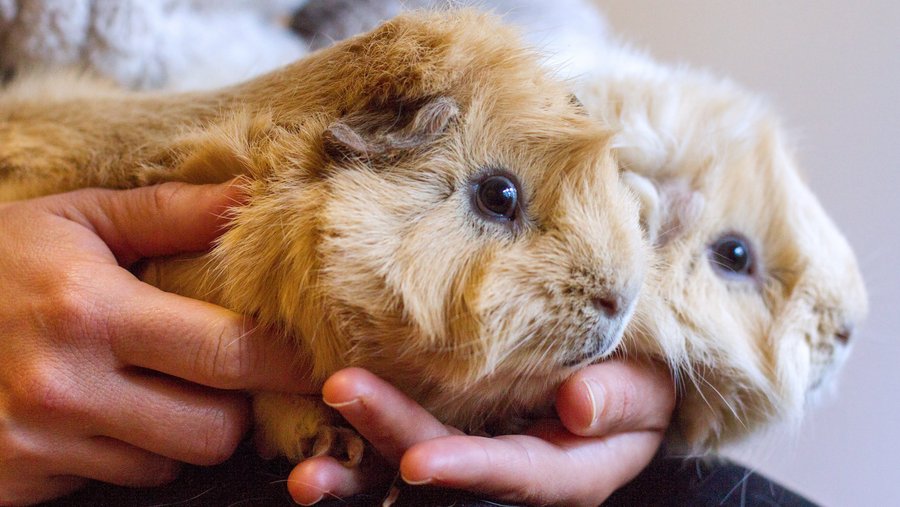
Tip 1: Together you are less alone.
Even though guinea pigs are often kept alone, this is definitely not species-appropriate. In nature, they are so-called "clan animals" and need contact with other members of their species. In most cases, up to ten animals live in rocky grasslands with caves and burrows. So please consider in advance whether you have enough space for at least two guinea pigs. They like to move around and love to run around. They communicate with each other by making sounds such as squeaking or whistling. You should take all of this into account when deciding on guinea pigs. Ideally, you should keep at least one neutered male and two females. Of course, a pair will also do. This can also be a pure group of females. If you buy two males, please make sure that they have been neutered before they reach sexual maturity - otherwise there will be territorial fights.
Tip 2: Plenty of space in the enclosure.
The Animal Welfare Association generally recommends a floor area of at least two square meters for two to four guinea pigs. With a two meter long side as a "race track". The enclosure itself should not have bars, but rather be made of closed Plexiglas or wood. Positive side effect: your home will be less dusty. The cage can be open at the top if the walls are high enough. You should avoid direct sunlight or placing it next to the heating. They feel really comfortable at a room temperature between 15 and 22 degrees. The enclosure should be filled with low-dust small animal bedding. You can, for example, create a forest floor atmosphere as bedding. You can also find this at Vitakraft®.
Tip 3: Provide enough shelter and variety.
Guinea pigs are naturally alert and like to hide. At the same time, they are flight animals and are quick to seek shelter. For you, this means providing sufficient shelter. For example, in the form of small houses, tubes, branches or roots. To give your guinea pigs an overview, you can also build a ramp so that they can climb onto the roof of the house. You can also add other discoveries to the enclosure so they don't get bored. There are plenty of ideas on the internet. Just try out what your guinea pigs like. We have also put together a few tips on how you can build nice hiding places.
Tip 4: Go on a discovery tour together.
Especially if you keep the guinea pigs indoors and not in an outdoor enclosure, discovery tours through the apartment are a welcome change. However, you should eliminate sources of danger here. These include electrical or telephone cables, cleaning products and poisonous houseplants. It's best to always be present and not leave the small rodents unattended so that they don't chew on furniture or carpets. If you have the option of keeping your guinea pigs outside in summer, we have a few tips on what you should bear in mind when keeping them in an outdoor enclosure.
Tip 5: A diet tailored to guinea pigs.
Guinea pigs don't actually need much. In any case, hay racks should not be missing in the enclosure. Vitakraft® has put together special Vita Verde® hay mixes for this purpose. A food bowl for fruit, vegetables or the main food mix also makes sense. And, of course, you should always offer enough water. The best way to do this is with a drinking bottle or a raised water bowl.
Tip 6: Prefer quiet sounds and contact.
Especially in a family of several people, there is often a lot of noise and commotion. Therefore, make sure that the guinea pigs are in a quiet place so that the timid creatures feel comfortable. If the still shy animals are picked up, they will keep still. However, this is because they go into a kind of state of shock. Of course, you can put them next to you on the sofa, for example - they might even spend an entire evening watching TV with you or the kids. As long as no jerky movements are made, you can trust your guinea pig to do this. You can tell when your guinea pigs are completely stressed by their loud squeaking or chattering teeth.
As you can see, guinea pigs are anything but cuddly animals. They need lots of exercise, variety and a life in a group to be happy. If you now have the feeling that you can't offer guinea pigs the life they need, then simply read our tips on happiness to find out which rodent might suit you better.