

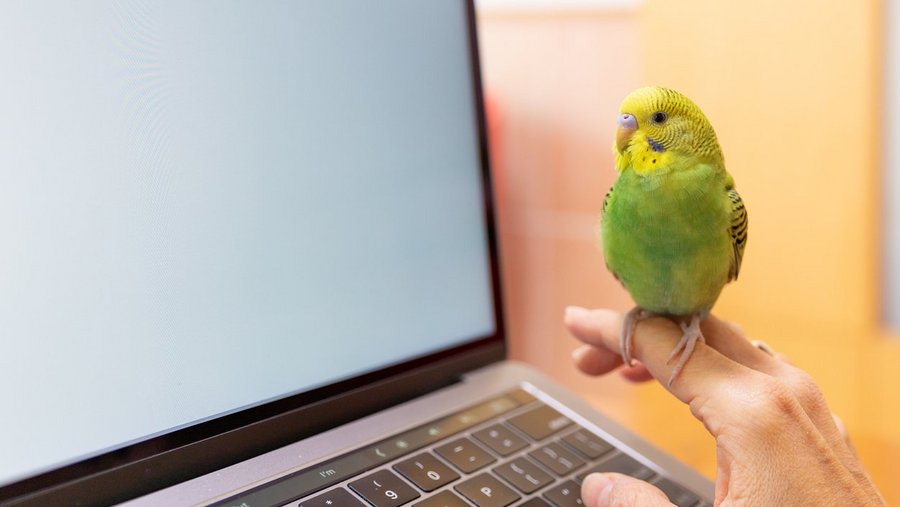
"Only individually kept budgies become hand-tame" - this statement is not only hopelessly outdated, but has also been disproved by countless trusting budgies kept in groups. The chances of getting your birds tame even increase with the size of your group. Because then you can benefit from the diversity in the flock. There is bound to be one that is more cheeky than all the others. And they will then follow this example. If you have a little patience and the necessary knowledge, you are guaranteed to get at least one of your budgies tame with our tips.
Step 1: Settle in calmly
When you take your feathered friends home, you will already have everything ready. The aviary is in place and fully furnished. To begin with, you want your new arrivals to acclimatize in peace and quiet. Give them at least one to two weeks to do this. Avoid hectic movements and noise completely. As soon as the animals feel comfortable, i.e. show no signs of stress when you approach them, you can get them used to your presence. To do this, first sit at a distance from their den that they can tolerate without becoming agitated. You can read a good book while you do this. Then keep reducing the distance to the cage.
Step 2: Make yourself interesting
As soon as the budgies accept your approach without stress, you can make yourself interesting with food. Foxtail millet is a safe bet. You also need: Patience, patience and more patience. Every single step of the habituation process should be firmly established before you go any further. For now, pinch the treat between your fingers and place your hand on the bars. Once your budgies have learned to accept their reward in this way, you can go one step further: Hold your flat hand with the treat in the cage. Do not stare at your birds. It unsettles them if they are fixated. And even more important: stay calm and relaxed when the first budgie dares to touch your hand.
Step 3: Move your hand
If one or even several budgies are used to feeding from your hand, you can introduce careful movements. These should be small and slow, never jerky. If the birds tolerate this, the big moment comes: you take the bird out of the cage by hand. Here too, proceed carefully and in small steps. The first time, put your hand and the bird right back into the cage. Gradually keep your hand outside for longer and eventually move away from the cage.
Step 4: the first free flight
The first free flight will probably happen by itself. At some point, your little friend will take off. It goes without saying that the room should be furnished accordingly and offer good seating options. If your budgie won't let you take it back to its home, just wait and see. He will be drawn back to his group in the evening at the latest. The path to freedom should always lead via your hand. Just like the special treats.
Once you have accustomed one or more of your budgies to your hand, there are many other options open to you. Budgies can learn tricks, and medical training is particularly helpful. You can check your budgies for injuries or parasites, get them used to having their nails trimmed or learn how to administer medication. Not all of your budgies may become tame. But some certainly will. Just give it a try.
The origin? Also plays a role.
Regardless of whether it's an animal shelter, breeder or dealer. The experiences that budgies have had in their previous home are formative. Therefore, make sure that you handle the animals with care, do not catch them by hand or chase them around the cage unnecessarily. If you want to adopt curly beaks from an animal shelter, the keepers will certainly know which animals were tame with their previous owner or are particularly people-oriented. If you get your budgies from a breeder, look for one who has already started to get their offspring used to being handled.