

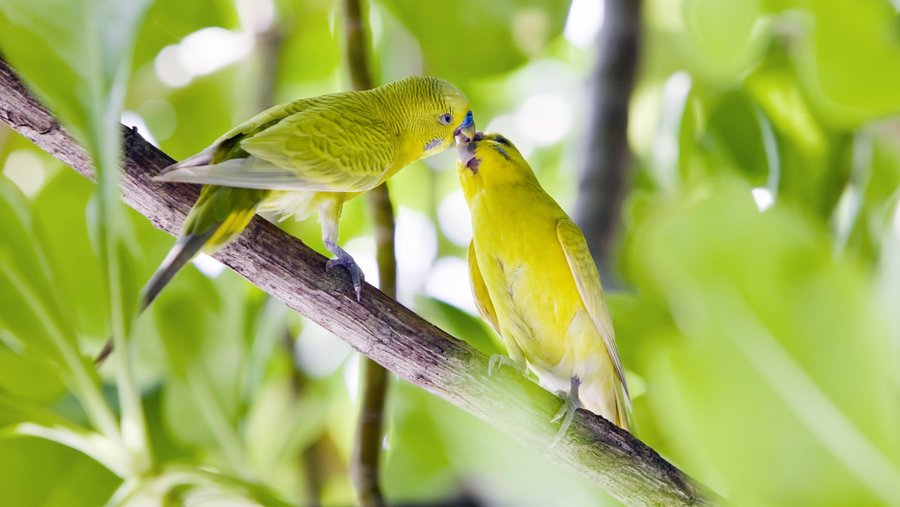
Offspring - yes or no? That is the question here.
If you would like to breed offspring, then one thing above all should be clear: Who will buy your young budgies later? After all, you can't keep them all in the cage. Ask your friends or a good pet shop if anyone wants budgies. By the way: If you have a male and female in the cage, this does not mean that offspring will automatically appear. As budgerigars are cavity breeders, they definitely need a nesting place that is safe and protected. If the female still lays eggs and you don't want any offspring, simply replace them with plastic eggs - then the female will eventually stop breeding.
A place to breed - it should be clean.
First of all, you should look for a suitable nesting site. Ideally, it should be made of wood and have a hole for the chick to slip into. The female bird will also be fed by her partner through the hole during incubation. It should have space for the female budgie and at least six eggs. Unlike zebra finches, for example, budgerigars do not need any additional nesting material. It is sufficient if it is nice and dark so that the female's egg maturation hormones are stimulated. However, there should be a hollow in the nest box for safe egg laying. Cleaning the aviary in advance is also an advantage. It also makes sense to check whether the birds are healthy. You may also be able to carry out a worming treatment - especially if you keep the budgies in an outdoor aviary.
Get them in a breeding mood - with the right food.
Yes, budgies also need a certain amount of stimulation to breed. Above all, the food is a decisive criterion. It should be rich in nutrients and minerals to ensure that the female budgie stays fit and healthy during breeding. And egg production in the small body is stimulated. The change in diet also ensures that the eggs receive the optimum amount of nutrients so that the brood has sufficient energy reserves and the eggs have a hard, resistant shell. A mineral pecking stone or similar should be available a few weeks before the start of incubation so that the small body gradually absorbs many minerals. An extra bird drink instead of normal water can also help here. Chickweed and wild grasses are also very popular during the breeding season. And of course the "must-have" for all future mothers: egg food. It contains high-quality protein sources from eggs and crustaceans and can be moistened slightly with water before feeding. It has a stimulating effect on the birds and makes it easier for them to get into the breeding mood. Shortly after the little chicks have hatched, the new parents also like to eat moist food to feed the young brood. It is easier to digest and can also be passed from beak to beak more easily to the chicks.
Now it's time to get started - with incubation and rearing.
If everything goes well, the female budgerigar will lay around six eggs in the nest box in less than two weeks and incubate them. After around 18 days, the little chicks will hatch, gradually "knocking" the egg shell soft. Once the chicks have freed themselves from the hard shell, they are fed and warmed by their mother immediately after hatching. After all, they are still completely naked and blind. You should also check here to see if they have all made it or if there is a dead chick in the nest. For the first few days, the chicks are still fed with their mother's foregut milk, later the father bird takes over the role of nourisher and feeds them pre-digested grains, vegetables and green food. As a precaution, you should also stop giving them additional food supplements, as young birds often react sensitively to an oversupply of vitamins and minerals.
Fledging - and off to freedom.
The first feathers sprout in budgerigar babies after about a week. However, they are still a long way from being able to fly. It takes about a month before the offspring leave the nest and make their first attempts at flapping. However, they will continue to be fed by their parents for some time after this. During this time, you will be amazed at how much life there is in the nest. After about 10 weeks, the little ones will be ready to be released into real life, or even a little later, so that you and your budgies can still enjoy the offspring. But then you should soon give your young budgies to the interested parties you have already decided on.
Phew, everything went well. Now you're ready for the next adventure in life? However, you shouldn't give your budgie the opportunity to have young more than once a year. Because in addition to all the joy, your birds are also exposed to a lot of stress. So give yourself a break - even for longer. And then you can think about starting a family again.